Sunday, October 4, 2009

Recent Article - Interior Design Magazine


Ob-la-di, Ob-la-da
Song and dance or exact science? The guru behind the Beatles lives on through interiors

LAURA FISHER KAISER -- INTERIOR DESIGN, 2/1/2009

The backlit onyx feature wall in the lobby of Tower II, an office building in Rockville, Maryland, designed by Kishimoto.Gordon.Dalaya to incorporate Vedic principles. Photo by Ron Blunt. With its pink marble floor and white Barcelona chairs in the lobby, Tower II at 2000 Tower Oaks Boulevard in Rockville, Maryland, looks like a typical suburban office building. But observe more closely, and you'll notice that tenants avoid stepping on the illuminated square of inlaid onyx by the elevators, the ceilings are precisely 9 feet 3 inches, a meditation room occupies the northwest corner on one level, and every single desk faces north or east. That's because Kishimoto.Gordon.Dalaya incorporated principles of Vedic or vaastu design, based on ancient Hindu texts. "We're not Vedic architects per se," KGD principal Tsutomu Ben Kishimoto says. "Like building codes or ordinances, Vedic guidelines were simply another set of program requirements."

The program required that Tower II conform to "natural law" as defined by the Institute for Maharishi Vedic Architecture in Fairfield, Iowa. Yes, that maharishi, aka His Holiness Maharishi Mahesh Yogi, who introduced the Beatles to transcendental meditation and founded a quasi-religious real-estate empire worth billions. The maharishi died a year ago, but his followers—who include developer Jeffrey Abramson, a partner in the Tower Companies—are carrying out the guru's vision. During the design and construction of Tower II, Jonathan Lipman, who serves as both institute director and chief architect of Fortune-Creating Building, vetted KGD's blueprints and materials.

A Los Angeles duplex condo by the Bondanelli Design Group. Photo by Beuth Photography.
To provide "cosmic harmony and support to the individual," the maharishi decreed, a Vedic building must be oriented perfectly to the cardinal directions, with an easterly entrance to face the dawn; be constructed according to "precise mathematical dimensions in harmony with the cosmos" and "proportionally designed to mirror the geometry or architecture of the universe"; contain a core of silence called a Brahmanstan; and have each room "carefully placed to resonate with the different energies of the sun as it moves across the sky." For example, Lipman arrived at the ceiling height at Tower II through a series of arcane calculations. Maharishi brochures claim that a wrongly placed entrance can fill a life with anger, aggression, poverty, and even chronic illness. In fact, they say, 75 percent of buildings suffer from incorrect orientation and thus are a major source of health and societal problems.

"Regardless of the more mystical aspects, the space does feel good," KGD senior associate Stefan Dytrt says. "Is it because we're good designers working with a soothing palette and natural materials? Is it the daylighting? Or is there a sixth sense? We don't know."


The lobby, with its glowing wall of onyx and sweeping northeast views of treetops, does evoke serenity on a late afternoon in winter—despite tinny Muzak playing somewhere. Then again, maybe that's partly to do with the air, which is super-scrubbed by high-tech mechanical systems. A LEED Platinum certification is pending.

A vaastu diagram and Leonardo da Vinci's Vitruvian man, both showing how human forms can produce harmony in man-made structures. Images courtesy of Sharad Mathur.
While only six architects in the U.S. are maharishi-certified, unaffiliated designers embrace a looser interpretation—never mind that if a building isn't auspiciously aligned, Lipman says, rearranging the furniture won't make much difference. For them, vaastu is more aesthetic than science, a kind of Indian feng shui that promotes similar goals of harmony and positive energy.

Interior Design Hall of Fame member Clodagh says that she views vaastu as one of many arrows in her quiver "to energize a space and make lives fruitful." If vaastu works, fine. Otherwise, she may tap feng shui, bio-geometry, or pyramid power.
Kinari Design principal Doug Atherley, having grown up in India and traveled extensively in Japan and Southeast Asia, considers vaastu part of a broader Asian aesthetic that influences his style. Still, he says, "Working mostly in London, I have little room for a stricter approach. I am not at liberty to change the orientation of a Victorian terrace!"

A Clodagh-designed New York bedroom where furnishings are symmetrical and the head of the bed points auspiciously east. Photo by Daniel Aubry. The limestone, fir, cherry, and etched glass of a Brahmanstan, or central core of harmony, in a San Francisco house by architect Anthony Lawlor. Photo by Rick Donhauser.

Likewise, Bruno Bondanelli of the Bondanelli Design Group says his work has vaastu elements but demurs on specifics: "In design, it's not about numbers but about proportions. I'm more spiritual, not a great mathematician."

Sharad Mathur, vice president of marketing for the office-furniture manufacturer Inscape Corporation, grew up and practiced vaastu architecture for more than a decade in India. He attributes a resurgence in popularity there in the past 15 years to politicians, tycoons, and Bollywood stars constructing vaastu homes. The most prominent example is the Antilia, a 24-story corporate meeting facility and private residence in Mumbai that Perkins + Will designed for billionaire Mukesh Ambani.

"I spend a lot of time explaining this is not hocus-pocus," Mathur says. "It's not spirituality. It's science."

In addition to blogging about vaastu design, Mathur gives popular lectures at trade events. He advises fellow designers to place most furniture along south and west walls and bedroom mirrors in a location where they won't reflect negative energy back at you while you sleep. Most important, avoid putting the master bedroom in the northeast corner of a house, which causes instability in relationships. Instead, he suggests, put the spare room there to ensure no guests overstay their welcome.

© 2009, Reed Business Information, a division of Reed Elsevier Inc. All Rights Reserved.

Wednesday, December 31, 2008

Creation of Life

There are numerous theories on the creation of mankind from Adam and Eve to Hindu belief of Brahma (creator) making the first living organisms to Darwin's theory. The only explanation which made sense was the Hindu belief that life on earth is cyclical and has four phases - creation, growth, maturity and destruction. The same holds for products, buildings, cities and land forms. This means that life on earth has been created many times and has reached a peak of intelligence and slowly plagued itself with overconfidence and playing god and finally destroying itself either by war or natural destruction. The stories we hear more about is the final destruction through the heroic battles and wars that divided the earth and led to complete annihilation of our species time and time again. One of the stories of destruction in Hinduism is similar to the story of Noah's Ark wherein Lord Vishnu (preserver) tries to save life from a massive insurgence of the sea that was gobbling up all land where animals and humans lived. Vishnu created a huge ship in which he took one living thing of every species such as an eagle, a dog, a cat and so on to make sure that he could preserve every species while earth would be completely submerged in water and take them to a new land where they could live and propogate once again.

The ancient battles from the Mahabharata (Hindu Mythology), Battle for Troy, Ramayana (Hindu Mythology) and tales of destruction such as Noah's Ark and the submerging of Dwarka (city in India where Lord Krishna presided) are all stories where most of mankind was destroyed. Yet these stories talk about advancements in science such as missiles and airplanes and heroes with special divine powers. It also speaks about equally strong villains with super powers used to hurt humanity. This is looking apparent in today's times where on one hand the advancements in medicine are leading to saving of lives and the new technology to fully automated manufacturing plants such as the Lexus plant in Japan. On the other hand we have a huge growth of terrorism and a complete disrespect of life and destroying existence similar to the evil super villains in mythology. Are we going to recreate our destruction? That is an important question in today's times when disrespect for life is conflicting with the higher learning about spirituality. The creation of superheroes such as Spiderman, Superman and Batman are all based on the same fundamental principles of heroes battling super villains whose aim is to destroy life whereas the superhero tries to preserve life. However the one dominant theme is that the good is not necessarily stronger than evil. They are equally strong and it follows the universal principle that equal positive and negative energy is what creates a balance.


Cycle of life is typically broken up into eras of 25920 years and this represents the creation, preservation and final destruction of life on earth. In Vaastu we use two types of mandalas; one with 9x9 squares and the other with 8x8 squares. The year was considered to have 360 days. The product of 9x8x360 = 25920 which is the length of an era. The creation of a building and site based on the same principle as the macrocosm was used as a measure of time in the microcosm in which the building existed. Astrology, astronomy, chemistry, language and construction all merged at the creation of the magic chart of 8x8 or 9x9 which depicted the movement of the sun, moon and all the changes occurring around us.

The science of creation is so closely linked to the science of building because structures are all that remain and tell the story of the time that each civilization existed. Buildings stood for longer than most civilizations and their perfect construction was important for it to carry the lineage of each clan of mankind. The Bhagvad Gita is a great book which explains the laws of Karma and how we are all souls in the search of becoming part of the supreme being and what is the meaning of our lives on earth.

Friday, August 1, 2008

Brief History of Quantum Physics

Quantum physics is the study of sub-atomic particles which theorizes that energy is transmitted partly as particles and partly as waves; hence determining perfect outcomes is next to impossible. Heisenberg’s uncertainty principle and the study of electromagnetic and cosmic rays confirmed this new discovery about the dual nature of energy.
Some of Quantum Physics milestones are presented below:

Milestones
1905 Albert Einstein’s – Particle Nature of Light and Photoelectric Effect
1911 Ernest Rutherford – Positively charged Nucleus is main mass of atom
1913 Niels Bohr – New model for the atom influenced by Planck and Einstein
1923 Louis de Broglie – matter particles should exhibit wave properties
1925 Werner Heisenberg - uncertainty principle
1928 Paul Dirac – Wave equation in operator algebra
1932 Von Neumann – Quantum mechanics in an operator algebra format

Quantum Physics was initially proposed by a group of scientists including Einstein, Max Plack and Niels Bohr in the early 1900’s; but was not fully accepted until 1924 when the hypothesis by Louis de Broglie proposed the matter-wave hypothesis of energy. The study of quantum mechanics was furthered by Wolfgang Pauli, Werner Heisenberg, Paul Dirac and Erwin Schrodinger in the 1920’s. Quantum mechanics disproved that time is a constant as earlier proposed through the Theory of Relativity and added the uncertainty of determining the exact state of an electron in an atom as well as the concept that no electron in an atom can be in the same exact state.

Thursday, November 29, 2007

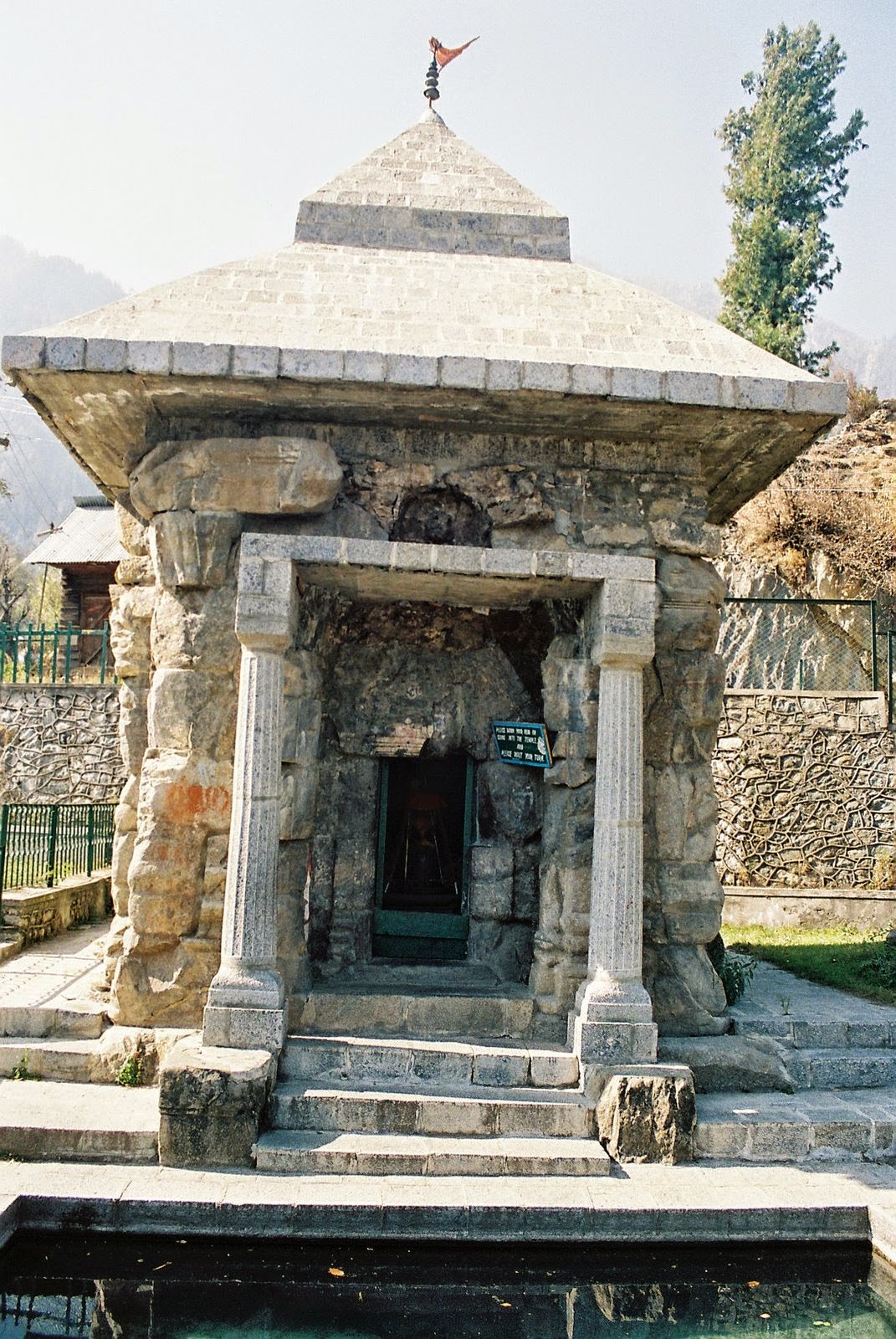
Some interesting Vedic Temples


Tuesday, May 29, 2007

Vaastu and the Environment


One of the most interesting findings from this ancient science (Vaastu) was the focus on the environmental impact created by the building. The first requirement of a good Vaastu structure was the use of regional and naturally occurring materials. The regional materials were typically within 100 miles of the building site. This minimized the creation of wastage due to transportation and by reducing the effort from animals to move the material. This made the animals and resources available for other tasks. This created a micro-cosm of providing employment and a sense of belonging for the local population with the new building. This led to the pride of communities towards their buildings.
Further requirements include the need of a building to relate to its surroundings. For example a new palace in the desert of Rajasthan in India should match the local architectural elements like window and door designs, ornamentation and use of local materials.
Other interesting concepts that builders used when building temples were:
  1. The growing of Peepal trees around the building
  2. The growing of Banyan trees around the building

Peepal trees have the quality of propagating at high speeds i.e. if no one maintains or looks after the structure, the Peepal trees grow and a forest comes up in no time wherein the structure is lost forever.

The banyan tree has the quality of strong, deep and long roots which spread fast and if not controlled properly rip into the structure and damage the foundations. This was the self destruct means for the temple. The roots of the Banyan tree would slowly consume the structure and demolish it. The materials used were local and natural; hence when a temple was neglected and went into decay - the temple would self destruct and disappear into the wilderness. It would disintegrate and decompose over a short time and would not contribute to any kind of pollution due to the disposal of the building.

Why have we forgotten these means of responsible design today? Our life within an age of information seems so easy to gain control over; yet it has never been tougher. The world is moving towards environmental initiatives to reduce the use of energy and resources and reduce the contribution towards landfills. Have we been successful? - No, due to the lack of there being an intuitive process and design methodology; the adoption in a whole hearted manner is limited to minimal stake holders and not the entire community. New design methodologies like Leadership in Energy and Environmental Design have come up, but the costs associated with certifying buildings can sometimes be high and scares away many clients from becoming followers.

The orientation of the buildings is done to reduce the amount of energy required to heat or cool a building. For example the south and west sides have less to no windows or openings; and if any were present they were protected with overhangs or tree were planted to shelter the windows from the direct sun rays coming from the south and west sides. At the same time the north and east sides were left open and maximum light was allowed to enter the space. The North and East provided adequate sunlight without glare and minimum amount of Ultraviolet rays mixed with visible light.

Water bodies were located in the North East. At the same time the site was levelled in a way that the run off from rains would flow from other directions towards the north east. This helped the water body that was located in the north east to get replenished as well as minimized the need for a regular drainage system because the water body acted as a catchment area.

Only natural materials, cement and metal hardware was used which did not create harmful emissions of any indoor gases and helped the interior environment to be in harmony with nature; which meant a comfortable space to live and work.

Thursday, May 10, 2007

New York Presentation (April 2007) Pictures


I believe that the New Yorkers were one of the best audiences I have been exposed to over the past few years. They were knowledgeable and accepting to different schools of thoughts elsewhere in the world. I enjoyed every minute presenting to this wonderful audience.


Press Releases on New York Vaastu Presentation


5000-year-old Science Brings the Earth into Design
The bedroom should never be in the north east sector, according to Vaastu Shastra.
BY MAIRI BEAUTYMAN
INTERIOR DESIGN · MAY 3, 2007

Last month, Sharad Mathur, senior manager of marketing intelligence for furniture manufacturer Teknion delivered an impassioned speech on the power of Vaastu Shastra, an ancient Indian science which helps define the layout in buildings (including palaces, homes, and temples). The presentation, which could be applied for one CEU credit, was held in Teknion’s New York showroom. Based on the idea that alignment with the Earth is needed for the health of a building’s inhabitants, Vaastu Shastra—literally, Book of Architecture—was written in Sanskrit in the 10th century AD by King Bhoja and used by the Vedic civilization. According to Vaastu principals, the bedroom, for example, should be in the south west sector of a house and never in the north east sector. This positioning will maintain stability in relationships.
"The principles of Vaastu harness the power of the earth in addition to other surrounding celestial bodies to bring health, wealth and good fortune," says Mathur. "By using these principles we can ensure that we do not lose out on opportunities and have stable and lasting relationships.

Ancient Indian Science May Be the New Feng Shui
May 04, 2007 - Source: InteriorDesign.net
KITCHEN & BATH MAGAZINE

A 5000-year-old Indian science may be the design world's new feng shui. Last month, Sharad Mathur, senior manager of marketing intelligence for furniture manufacturer Teknion, delivered a speech on the power of Vaastu Shastra, a 10th-century Sanskrit book and principle that explain how alignment with the Earth is necessary for the health of a building's inhabitants. "The principles of Vaastu harness the power of the Earth in addition to other surrounding celestial bodies to bring health, wealth and good fortune," says Mathur. "By using these principles we can ensure that we do not lose out on opportunities and have stable and lasting relationships." Vaastu Shastra's tenets help define building layouts, including kitchen design. They claim that because the kitchen deals with the health and nourishment of the family, inappropriate placement or design can directly cause illness and loss of health.
Techniques to Vaastu a kitchen include: place the room and stove on the southeast side of the house; orient the kitchen platform to allow the chef to face auspicious east while cooking; and put appliances like dishwashers and toasters on the south side because of their heat production.

Thursday, May 3, 2007

Vedic Square and Cosmology


The most stable number in Vaastu was considered to be the number 8. This was due to a number of observations that were made. One of the major observations was that the human body was designed on the proportionate basis of 8 head lengths. The belief that the earth and the universe were also based on man as a unit of measurement - added to the belief that 8 was an integral number in the study of numbers.
Other events included the eight primary phases of the moon and the movement of the moon through 28 days; which formed the number of outer in a 8x8 square as shown in the chart. Eight also was the cardinal directions from East, South East all the way to North East.

Nature always treated 8 as a stable number when we saw how elements in nature reacted and how stable compounds were created. It was seen that all elements reacted till hey had 8 electrons in their outer circle. The only stable elements are inert gases which have 8 outer electrons. The story of 8 goes on with the 7 colors of the rainbow in addition to the entire form of the rainbow itself and the 8 wheels in the chariot of the sun god as a symbol of stability.

Thursday, April 5, 2007

Structure of an Atom


Most of us believe that an atom is a dense basic building component which makes up all matter. Interestingly the largest portion of an atom is just plain space or vacuum. The atom is anything but dense and compact. The position of the electrons and sub atomic particles like protons and neutrons cannot be accurately determined. There are uncertainty and probability equations such as Heisenberg's uncertainty principle which govern sub atomic particles.
This goes on to confirm the relevance of the first element in Vaastu called Space or Ether - the nothingness in which all of us exist. It is the most predominant element and the toughest to describe. Nothing in nature is perfect as the position of no particle can be accurately determined. Which leads me to believe that astrology and other prediction methods work on principles of probability rather than facts. They are governed by the belief that every person works and lives according to a pattern. This pattern is taken into account in order to predict an accurate future. This however could be inaccurate if drastic changes in patterns occur.
I am constantly reminded of one mythological story of a lady Savitri who is married to a man called Satyavan. Savitri is an extremely pious individual and she believed that only good begets a person who does good. However, she realised that her husband Satyavan had to die as per destiny at a young age. The story goes that when the lord of death comes to her house to take away her husband she challenges the lord of death with a series of questions. She protests that if she has done all good how can she be made to suffer. How can she live happily without society scorning her if her husband dies. How would she answer a persons claims that good does not beget good. She follows the lord of death and continues to question him till the point that the lord of death grants her a boon (other than giving Satyavan's life back) if she would return. She asks for her father to be blessed with more children. The god happy that he had solved the issue keeps travelling with Satyavan's soul. Savitri kept following the lord of death and he once again grants her a boon if she would return. She asks him to return her in -laws kingdom and riches back. The god of death proceeds once again. When the god of death looks back again after some time, Savitri was still following him. The god finally says I grant you one last boon - take it and return. Savitri asks for many sons and pleaded that Satyavan should be their father. The death god realizes that he was not going to win this one and makes an exception to let her husband live.
The story was about the power we all have on our destiny. The lord of death did not anticipate the change in Savitri's pattern of behaviour - by challenging the death of her husband. Savitiri changed her destiny based on a major shift and change in her behaviour pattern.

Saturday, March 17, 2007

Basic Palmistry


  1. Palmistry is a great way to determine who we are and know more about others before we enter into personal or professional relationships. Ancient Japanese warrior Musashi said that the only way to win is to know our self, the competition and then determine an appropriate strategy.
    Palmistry is an ancient science used extensively in India to ascertain your past and future. This reading is typically done by a professional palmist who understands the meaning and relationship of many of the uncommon lines which can have profound effects on our life. The drawing of a basic palm shows the principal lines in the hand and these lines by no means are capable of providing a complete analysis of one's life. Lines keep changing and a perfect judgement of the future is tough using palmistry. Other sciences like astrology would be more appropriate for analyzing the future. One thing to keep in mind with palmistry is that it depicts emotional lines and they tell you a lot about the mental state of your life at a specific period in time. This is done using a time line that is drawn for each major line.
    The Lines:

1. Life Line - this line depicts the longevity and quality of life of the person, however it would not be appropriate to judge the age of a person using the length of this line. A clean line depicts an uneventful life, a broken line means changes in life or career, chained lines depict indecisiveness during that period in life and so on.

2. Heart Line - this line depicts the individuals capabilities to take decisions of a personal and emotional nature. A chained line shows difficulty in taking decisions of the heart. Also this line starts at the little finger and moves towards the index finger. The longer the line the less judgemental the individual and the shorter the line the more judgemental.

3. Head Line - this line shows education and academic achievements. It is the line of learning and even if a formal education is not achieved yet deep learning takes place, the line will be long. The longer the line is starting from the thumb side of the hand, the more the person invests in learning.

4. Marriage Lines - depict relationships of an emotional nature with persons of the opposite sex. These lines are timed starting from the heart line moving towards the little finger. If a line is present close to the heart line it depicts a relationship at an early age and if the line is towards the little finger it is a relationship at an older age.

5. Career Line - this line shows our progression in our career. It starts at the base of our palm and moves towards our fingers. Breaks in the line depict breaks or changes in our career.

One thing to always remember with palmistry is that the lines are relative to your birth conditions; hence two people with similar lines could have completely different lives. Also you read the right hand for right handed people and left for lefties. The other hand is taken as a reference point where you should have gone based on birth conditions.

Hope the above introduction to this ancient science can help as a tool to improve the quality of your personal and working relationships. We are all different and the important thing to know is that rather than assume intentions from others, we should learn to understand, work with and accept each other.

Monday, March 5, 2007

Seattle Vaastu Presentation


The presentation was on March 1st, 2007 and was held at Mark and Hal's great venue in downtown Seattle. The audience was fabulous and included some extremely knowledgeable individuals who were well rounded in ancient building sciences.
Some pictures of the presentation are seen with participants enjoying the thoughtful Indian menu and pondering over the secrets their palms held.

When does Vaastu work and when does it fail?

Vaastu requires us to be at an emotional equilibrium while inside our homes and workplaces. This stable state occurs when we feel the effec...